Lindha: Elegant Handwritten Display Font for Crafters
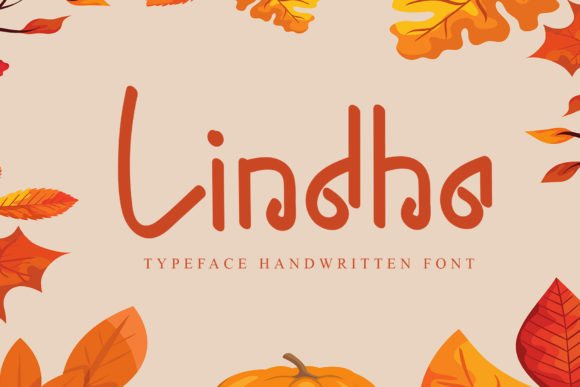
As a maker who designs printable wedding suites, hand-poured candle labels, and boutique gift tags, I’ve learned that the right display font doesn’t just look pretty—it builds trust, conveys care, and makes your product feel intentional. That’s why Lindha has become one of my go-to fonts for physical and digital craft projects. It’s not just another script—it’s a refined, elegant handwritten display font with graceful strokes, subtle contrast, and a warmth that feels personal without sacrificing polish.
Lindha shines where first impressions matter most: on greeting cards tucked into handmade gift boxes, on kraft paper tags tied to artisan soap, or as the hero type on a farmhouse-style welcome sign at a barn wedding. Its letterforms carry the charm of real penmanship—slight variation in stroke weight, soft entry/exit points, and natural rhythm—but it’s carefully designed for clarity. That means it holds up beautifully at small sizes (think 8–10 pt on a tea towel tag) and scales confidently for large-format prints like vinyl wall art or acrylic wedding signage.
I use Lindha most often for short, high-impact text: names on place cards, “Handmade with Love” on jar labels, “Est. 2023” on boutique packaging, or seasonal phrases like “Gather & Give” on holiday printables. It’s not meant for body copy—but that’s exactly what makes it powerful as a display font. When you pair Lindha with a clean sans serif (like Montserrat or Poppins) for supporting text, your layout gains instant hierarchy and sophistication. For example, a printable planner page might feature Lindha for the month header (“October”) and a crisp geometric sans for weekly checkboxes and notes—balancing personality with practicality.
For Cricut and Silhouette users, Lindha cuts cleanly on vinyl and cardstock when used at appropriate sizes. I recommend keeping it above 14 pt for sticker sheets and above 20 pt for iron-on transfers on cotton tees or linen tote bags. Its open counters and generous spacing prevent clogging during cutting, and its smooth curves reduce weeding time. On mockups, Lindha reads clearly even in low-res previews—so your Etsy listing thumbnails and social media graphics stay legible and inviting.
One of my favorite real-world uses? Candle labels. A small batch of lavender-scented soy candles deserves more than generic script—it needs something that whispers luxury but feels approachable. Lindha delivers that balance. Paired with a minimalist serif (like Playfair Display) for scent descriptions, it creates cohesive branding across jars, boxes, and Instagram posts. Same goes for wedding stationery: Lindha works equally well on foil-stamped invitation suites and digital RSVP cards—giving couples a consistent, elevated experience from save-the-date to thank-you note.
Lindha also performs beautifully in seasonal craft design. Think “Cozy & Covered” on a winter mug template, “Sunshine & S’mores” on a summer picnic SVG bundle, or “Bloom Where You’re Planted” on a botanical-themed wall quote. Because it’s designed as a display font—not a full-text typeface—it avoids visual fatigue while reinforcing emotional tone. Customers don’t just read your message; they *feel* it.
When designing product packaging—especially for handmade goods—I pay close attention to how fonts affect perceived value. Lindha’s elegance subtly signals quality and attention to detail. A customer seeing Lindha on a honey jar label or a ceramic mug decal subconsciously associates that craftsmanship with care, intention, and authenticity. That emotional resonance translates directly to higher perceived value—and yes, better conversion rates on your shop listings.
Before purchasing any font for commercial use, always verify licensing terms—and Lindha is no exception. If you’re selling physical products (like stickers, mugs, or greeting cards), offering digital downloads (printables, Canva templates, SVG files), or creating client work (logo design, branding kits), confirm that Lindha includes a commercial license. Most reputable display font sellers do—but double-check for restrictions on merchandise volume, resale of font files, or embedding in apps. When in doubt, reach out to the foundry or vendor directly. Protecting your business starts with using fonts the right way.
Lindha comes with thoughtful extras that elevate your workflow: alternate characters, discretionary ligatures, and swashes that let you add custom flair without overcomplicating design. I keep a cheat sheet of my favorite alternates for “A,” “L,” and “H”—they’re perfect for monogrammed tote bag designs or boutique logo lockups. The font is typically delivered in OTF and TTF formats, compatible with Adobe Creative Suite, Cricut Design Space, Silhouette Studio, and free tools like Canva and Google Fonts (if hosted there). While multilingual support isn’t mentioned in the base description, many modern display fonts like Lindha include extended Latin character sets—ideal for names with accents or bilingual wedding stationery.
What truly sets Lindha apart from other handwritten fonts is its versatility across mediums. It looks equally authentic on matte paper wedding programs and glossy vinyl bumper stickers. It reads clearly on dark backgrounds (try it in white or gold foil) and maintains charm on light kraft stock. And because it’s not overly ornate or fragile-looking, it fits seamlessly into both modern minimalist and rustic-chic aesthetics—making it a smart long-term investment for your design assets.
If you’re building a recognizable brand voice—or simply want your next craft project to feel more polished, personal, and professional—Lindha is worth every penny. It’s the kind of premium font that does quiet, confident work: elevating your product without shouting, honoring tradition while feeling fresh, and helping your handmade creations stand out—not just in your shop, but in your customer’s heart.